
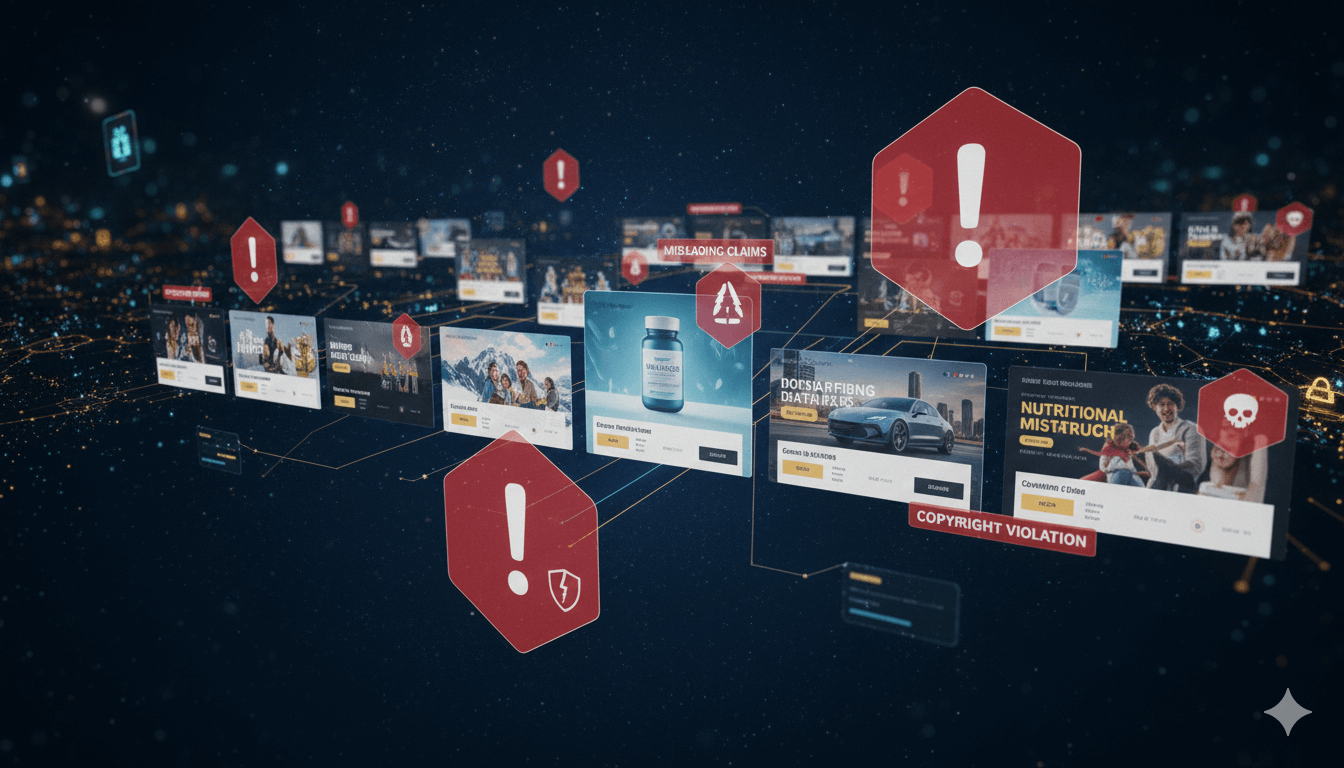

How speed, automation, and scale are impacting message integrity in modern ad creative
Artificial intelligence has transformed advertising at an unprecedented pace. Brands can now generate high volumes of ad creative in minutes, test hundreds of variations simultaneously, and launch campaigns faster than ever before. While this acceleration has unlocked efficiency and reach, it has also introduced a growing challenge that advertisers can no longer ignore: messaging misalignment between ads and the landing pages they lead to.
As thousands of AI-powered creative generating tools are available on the market, creative production scales, and the risk of ads misrepresenting offers, tone, or intent increases. What an ad promises and what a user ultimately experiences are drifting further apart. This disconnect affects performance, compliance, and long-term brand trust.
In fact, according to IAB’s 2025 “Digital Video Ad Spend & Strategy” report, PR Newswire reports that nearly 90% of buyers are already using or planning to use generative AI for video ad creative, illustrating how pervasive this creative-volume explosion has become.
Why AI-powered creative is harder to keep aligned
AI excels at speed, but not judgment. When automation drives the creation of copy, visuals, and variations, subtle changes can quickly alter meaning. Headlines stretch claims. Visuals imply urgency. Language suggests exclusivity or guarantees that the landing page does not clearly support.
What makes this more complex is volume. A single campaign may now include thousands of creative combinations across formats such as text, display, carousel, and video. Each variation increases the chance that tone, claims, or offers drift from the core message.
Key risks include:
- Ad copy overstating product benefits
- Visuals implying outcomes not supported by the landing page
- Inconsistent pricing or promotion language
- Messaging that unintentionally violates advertising standards
These risks are rarely intentional. They are the natural consequence of speed outpacing oversight.
The impact of message drift on performance and trust
When ads and landing pages are not aligned, users notice. The result is not just higher bounce rates, but diminished credibility.
A misaligned message creates friction at the moment of conversion. Users feel misled, even if the difference is subtle. Over time, this conditions audiences to distrust advertising messages altogether, reducing engagement quality and weakening brand perception.
From a performance standpoint, messaging drift leads to:
- Lower-quality traffic
- Reduced conversion efficiency
- Higher acquisition costs
- Declining confidence in campaign metrics
From a brand standpoint, the implications are more severe. Trust lost through inconsistent messaging is difficult to rebuild.
Compliance and transparency in the age of AI-generated ads
Regulatory alignment has always been critical in advertising. What has changed is the scale and speed at which compliance risks can now emerge.
AI-generated creative can unintentionally introduce misleading claims or ambiguous language. Without structured quality assurance and creative verification processes, brands expose themselves to:
- Increased regulatory scrutiny
- Platform penalties
- Reputational risk
- Inconsistent brand messaging
Ensuring responsible advertising now requires more than manual review. It demands systems and workflows that verify message integrity across every creative touchpoint, from ad impression to landing page experience.
Why message integrity is becoming a competitive advantage
As automation becomes standard, differentiation shifts away from volume and toward precision. Brands that maintain consistent, accurate messaging across all campaign elements stand out in an increasingly crowded digital environment.
Strong message integrity reinforces:
- Audience confidence
- Campaign efficiency
- Long-term brand loyalty
- Transparent advertising practices
In an ecosystem shaped by automation, trust is no longer a soft metric. It is a measurable driver of performance and sustainability.
Best practices for maintaining alignment in AI-driven advertising
To combat creative chaos and protect brand credibility, advertisers should prioritize:
Implementing creative verification processes
Ensure ads accurately reflect landing page content, including tone, claims, and offers.
Establishing quality assurance workflows
Create standardized checkpoints to review message consistency before deployment.
Aligning creative with regulatory guidelines
Validate that all claims meet advertising standards and compliance requirements.
Monitoring performance indicators tied to integrity
Track bounce rates, engagement quality, and post-click behavior to identify misalignment.
Prioritizing transparency in messaging
Consistent, honest communication strengthens trust and enhances user experience.
The future of AI advertising depends on accuracy
AI will continue to drive creative innovation and efficiency. That is inevitable. What is not guaranteed is how responsibly that power will be used.
Advertisers that invest in message integrity, creative accuracy, and compliance alignment will outperform those that chase speed alone. As automation evolves, the brands that succeed will be the ones that pair innovation with accountability.
Because in a landscape defined by scale, the real advantage is not how much creative you produce. It is how accurately that creative reflects the truth of your brand.
Frequently Asked Questions
Messaging drift occurs when ad creative no longer accurately reflects the content, tone, or promise of the landing page, leading to user confusion and reduced trust.
AI generates creative at scale and speed, which can introduce subtle variations in language or visuals that shift meaning without proper oversight.
It can increase bounce rates, reduce conversion quality, and weaken long-term brand credibility.
Creative verification is the process of ensuring ads remain accurate, relevant, and consistent with the user experience they promote